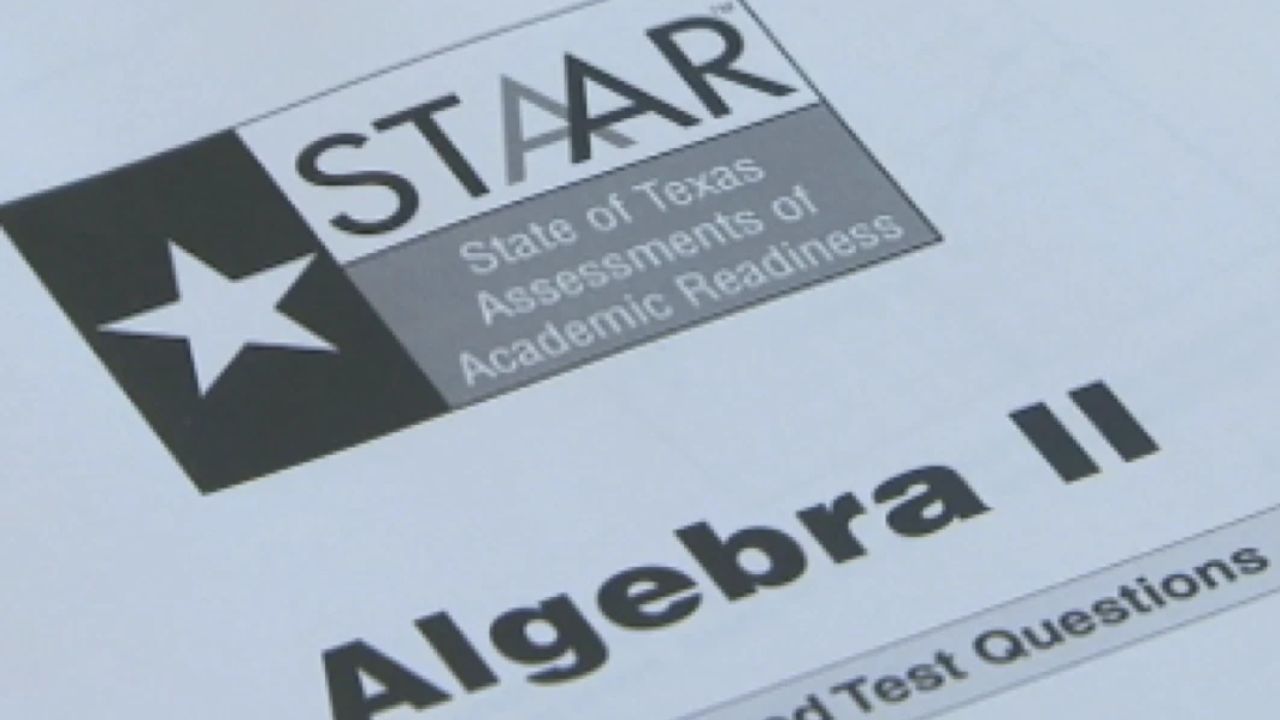
Austin, TX — Texas public school students could soon see the end of the STAAR test as the Texas House committee on public education advanced House Bill 8 (HB 8), a proposal aimed at reducing student stress and anxiety while providing teachers and parents with more meaningful data on academic progress.
Rep. Buckley Proposes Year-Round Testing
The bill, authored by State Rep. Brad Buckley, R – Salado, would eliminate the State of Texas Assessments of Academic Readiness (STAAR) at the start of the 2027-2028 academic year. In its place, students would take a series of shorter assessments throughout the school year, including:
- Beginning-of-year test
- Middle-of-year adaptive test
- End-of-year criterion-referenced test
“To eliminate the high-stakes, one test, one day environment,” Buckley told colleagues during the committee meeting, emphasizing the need to reduce pressure on students (source).
Students Testify About STAAR Pressure
The stress caused by the current STAAR system was illustrated by a seventh-grade student from Fort Worth ISD, who testified:
“The STAAR test creates that major weight on my brain where I can’t think while the teacher is giving me information. I don’t sleep well and I don’t eat well. Now you tell me if that seems healthy for a child’s brain and body.”
Lawmakers on both sides agree that STAAR needs reform, but the path forward has faced legislative disagreements, especially with the Senate during the regular session this year.
Adaptive Testing Explained
The proposed adaptive tests would adjust question difficulty based on a student’s previous responses, offering a more precise measure of individual performance. Results would be shared with teachers and parents within 48 hours, allowing timely interventions.
“An adaptive test goes up and it goes down, and it can get you a really full picture of where exactly your child is performing,” explained Mary Lynn Pruneda, director of education policy at Texas 2036, a nonpartisan policy group.
The end-of-year exam would be criterion-referenced, providing a standard measure of grade-level proficiency while limiting over-testing.
- Districts would be restricted in the number of preparation tests allowed per student.
- Teachers would gain more instructional time before administering the final assessment.
Debate Over Test Authority
HB 8 passed the committee with eight ayes and one no, with six members absent. The sole dissenting vote came from State Rep. Gina Hinojosa, D – Austin, who questioned whether the Texas Education Agency (TEA) should oversee test creation:
“I just have no faith that our state will do a good job of it as it has not done a good job with the creation of the STAAR test,” Hinojosa said, advocating instead for nationally norm-referenced tests to compare Texas students with peers nationwide.
HB 4, introduced earlier, had proposed three national tests but was ultimately shelved. Buckley opted for a criterion-referenced system after consulting with stakeholders, arguing it would better measure mastery of state standards.
“I think this is a fair sort of marriage of the two ideas that gives flexibility to districts that can move for growth throughout the year, but also gives us the opportunity to know whether or not kids are achieving at a level they should be on the state standards,” Buckley said.
Next Steps for the Bill
An almost identical bill has already passed the Texas Senate, and HB 8 now moves to the House floor for a vote. If passed, Texas students will experience a significant shift in standardized testing, focusing on continuous evaluation rather than a single high-stakes test.
What are your thoughts on the proposed testing changes for Texas students? Share your views in the comments.