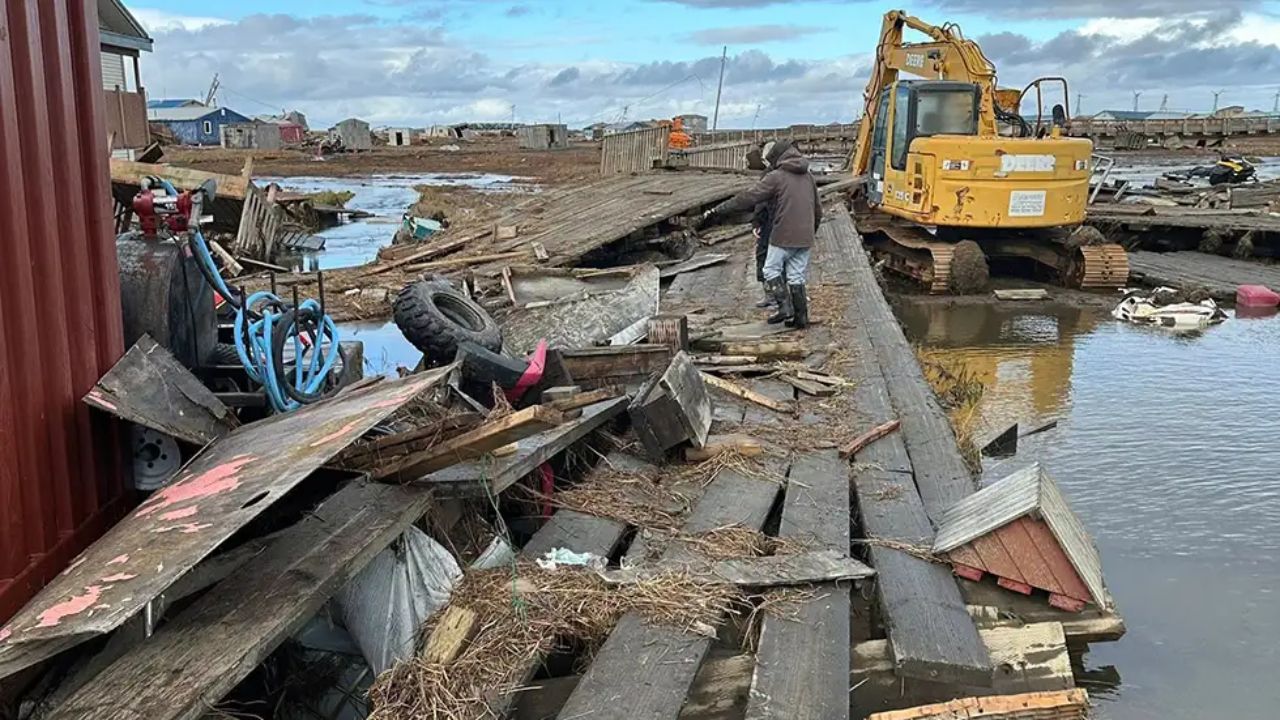
Anchorage, AL – More than 1,500 people have been displaced along the Alaskan coast after severe storms battered the region, following the remnants of Typhoon Halong. Officials are working to provide emergency shelter and supplies as additional rain and strong winds are forecast in the coming days.
Communities Hit Hardest by the Storm
The weekend storm brought high winds and powerful surf that severely impacted low-lying Alaska Native villages along the Yukon-Kuskokwim Delta, located nearly 500 miles southwest of Anchorage.
Among the hardest-hit areas were Kipnuk (population 715) and Kwigillingok (population 380), which are only accessible by air or water at this time of year. Preliminary assessments revealed that every home in Kipnuk sustained damage, with around three dozen homes floating away from their foundations.
Fatalities and Missing Residents
At least one person was killed in the affected communities, while two men remain missing after their homes were swept away by floodwaters. The U.S. Coast Guard rescued approximately two dozen residents whose houses were carried into nearby waterways.
Residents described the scene as catastrophic, with many homes completely submerged or drifting in the water.
Evacuations and Emergency Shelters
Authorities have flown dozens of evacuees to a temporary shelter at the National Guard armory in Bethel, a regional hub with a population of 6,000. Officials are also considering relocating residents to longer-term emergency housing in Fairbanks and Anchorage.
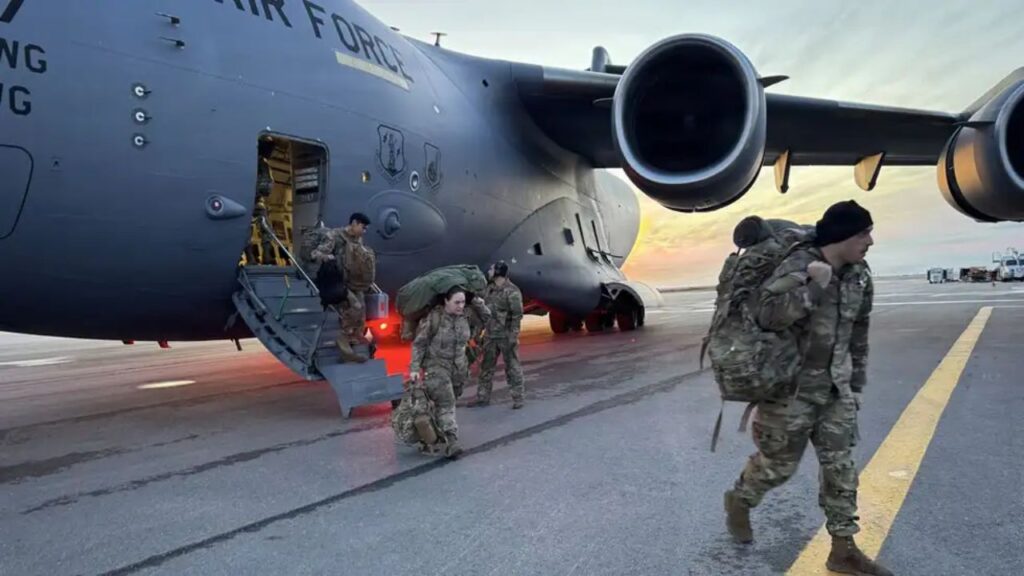
Hundreds of displaced residents stayed in school shelters, though facilities were limited, with some lacking working toilets. In Kipnuk, about 400 people spent the night in the school gym while authorities worked to provide portable toilets and other basic necessities.
Heartbreaking Accounts from Residents
Among those awaiting evacuation was Brea Paul of Kipnuk, who described witnessing roughly 20 homes floating away on Saturday night.
“Some houses would blink their phone lights at us like they were asking for help but we couldn’t even do anything,” Paul wrote in a text message.
“It’s so heartbreaking saying goodbye to our community members not knowing when we’d get to see each other.”
In Kwigillingok, one woman was found dead, and officials suspended the search for two missing men after their home floated away.
Damage Across the Region
Storm impacts were widespread:
- Napakiak experienced flooded power systems.
- Toksook Bay reported severe erosion along the coastline.
- Nightmute saw floating fuel drums and a fuel sheen on the water.
The Alaska National Guard was activated to assist in emergency response, delivering food, water, generators, and communication equipment whenever weather conditions permitted.
Recovery Challenges Ahead
Officials warned that rebuilding will be a lengthy process, particularly with winter approaching. Most supplies must be transported in, and communities will require continued support to recover.
Rick Thoman, an Alaska climate specialist at the University of Alaska Fairbanks, highlighted the resilience of Indigenous communities but stressed that when nearly every home is damaged, the challenges are immense.
“There’s only so much that any individual or small community can do,” Thoman said.
He also noted that warmer Pacific Ocean waters, driven by human-caused climate change, likely intensified the storm’s impact.
Historical Context
Alaska has faced similar events in the past. Typhoon Merbok, three years ago, caused significant damage across western Alaska, underscoring the region’s vulnerability to extreme storms.
How should communities in Alaska prepare for increasingly severe storms fueled by climate change? Do you think emergency response efforts are sufficient to protect remote villages?
Share your views and experiences in the comments below — your perspective matters.