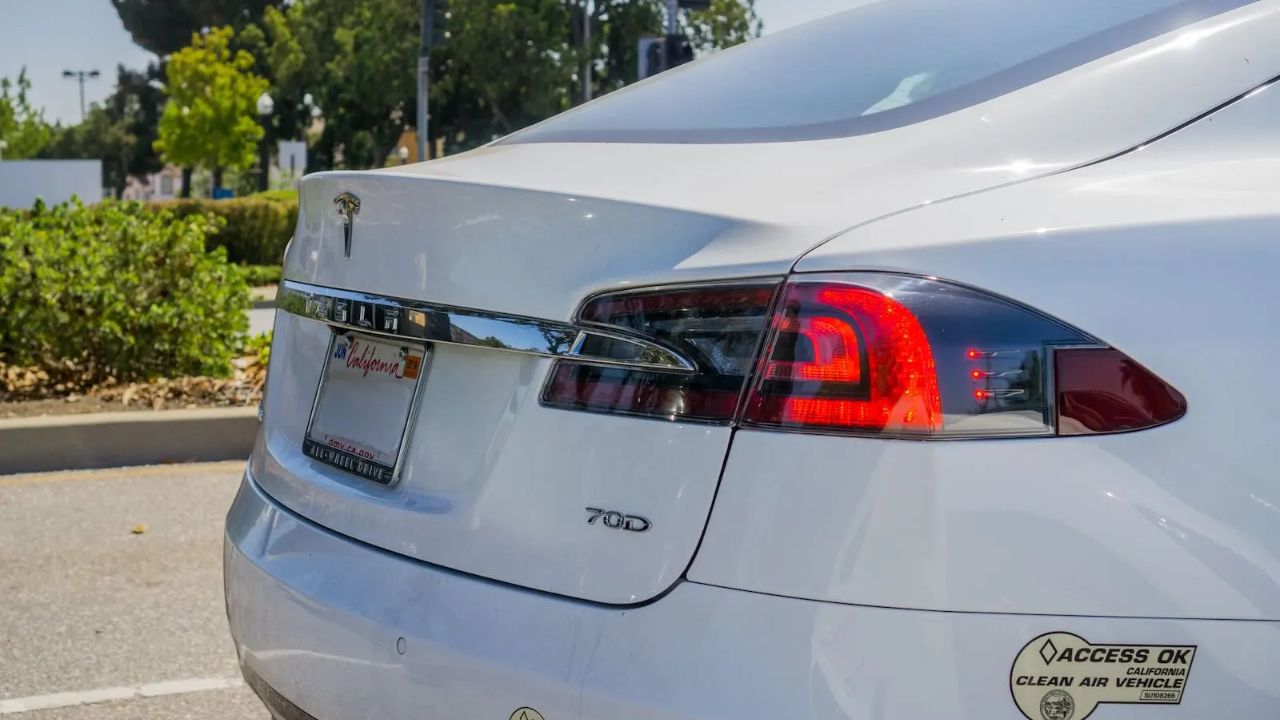
Sacramento, CA — For over two decades, drivers of electric and hybrid vehicles in California have enjoyed a coveted perk: the ability to drive solo in carpool (HOV) lanes. But that benefit is now set to expire on September 30, unless Congress acts to extend the Clean Air Vehicle (CAV) Decal Program.
Decal Program Set to Expire Without Federal Approval
The California Department of Motor Vehicles (DMV) confirmed that new applications for decals will be accepted until August 29, but existing decals will be invalid starting October 2 if Congress doesn’t intervene.
“Clean Air Vehicle Decals are a smart, cost-effective incentive that has played an important role driving the adoption of clean and zero-emission vehicles in California,” said Liane Randolph, chair of the California Air Resources Board. “But thanks to the federal government’s failure to act, this successful program is coming to an end.”
— Los Angeles Times
The program’s continuation requires federal reauthorization, because it was originally allowed under a 2015 highway funding bill permitting the U.S. Environmental Protection Agency to grant solo HOV access to clean-energy vehicles.
Why Congress Is Holding the Keys
According to Bill Magavern, policy director for the Coalition for Clean Air, extending the program would require congressional approval and the President’s signature.
“I certainly would not bet on that,” Magavern said. “It seems that the only deadline that this Congress responds to are the deadlines that are set by Trump, and I really don’t see him going out of his way to extend this program.”
A state-level effort is already in motion. Assemblymember Greg Wallis authored AB 2678, signed into law by Gov. Gavin Newsom, which would extend the program to Jan. 1, 2027 — but without federal backing, the law becomes ineffective.
What’s at Stake for California EV Drivers
California is home to 519,000 active CAV decals, according to the San Francisco Chronicle. In 2023, the state also led the nation in EV registrations with nearly 1.3 million, far ahead of Florida (255,000) and Texas (230,000) — neither of which offer a similar carpool incentive.
If the program expires:
- EV drivers lose carpool access unless they meet posted occupancy
- Drivers will have to pay tolls or risk citations
- One fewer incentive may slow EV adoption momentum
Are CAV Stickers Still an Effective Incentive?
“Clearly in the early days of zero-emission cars, the carpool lane stickers were an important incentive for some drivers, particularly in places like the Bay Area and Los Angeles where there is major congestion,” Magavern said.
Still, he now believes the program may be less relevant:
“I think that you can make a good argument that they’ve outlived their time and that it’s more important to have the carpool lanes be filled by vehicles that actually have carpools in them.”
However, not everyone agrees. Alexia Martineau, senior policy manager for Plug In America, emphasized the program’s ongoing influence:
“HOV lane access through the Clean Air Vehicle Program is one of those things that drivers look to to assess the overall package of what it’s like to either go electric or to get that next electric vehicle.”
Potential Impact on California’s Climate Goals
California has a goal for 100% of new passenger vehicles sold by 2035 to be zero-emission. Experts worry that losing this program could slow down that transition.
A UC Davis study found that nearly 30% of EV buyers said they wouldn’t have chosen an electric vehicle without the HOV decal or other incentives. Scott Hardman, assistant director of the Electric Vehicle Research Center, added:
“We’re still at a very fragile point in the transition to all vehicles being electric. Only eight percent of the vehicles on the road are electric, and that’s not enough for you to reach the point where the vehicles are a social norm.”
Recent political actions have also threatened California’s broader climate initiatives. The U.S. House of Representatives recently voted to prohibit California from banning gasoline-only vehicles by 2035, and to limit its authority to set emissions rules for heavy-duty trucks.
“These actions are part of the Trump administration’s war on California’s air, water and climate,” Magavern argued.
What Happens Next?
Unless Congress reauthorizes the program, the CAV decals will no longer allow solo carpool access starting October 1, 2025, and California’s EV adoption strategy may take a hit.
What do you think — should the federal government extend carpool access for EVs? Share your thoughts in the comments.