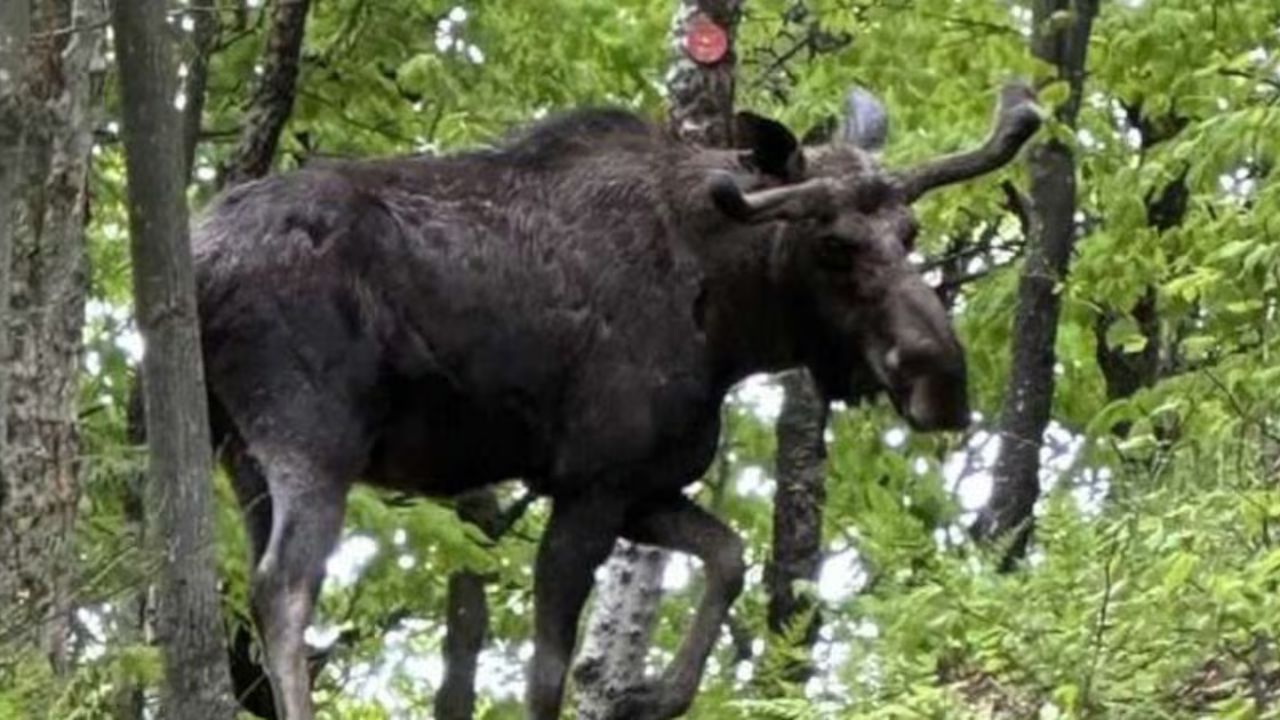
Tupper Lake, NY — A bull moose that had lingered near a popular hiking trail in the Adirondack Mountains for months and prompted its closure was euthanized this week after state wildlife officials found the animal to be in poor and worsening health.
Trail Closed Since June Due to Moose’s Behavior
The Goodman Mountain trail, located in the Horseshoe Lake Wild Forest, had been closed since June 6 after hikers began reporting that the roughly 6-foot-tall moose was behaving unusually and refusing to leave the area near the summit.
“Efforts to coax it away were unsuccessful,” said officials with the New York State Department of Environmental Conservation (DEC).
The moose was first spotted in May, and although the initial behavior did not appear threatening, it was unusual enough to cause concern for both public safety and the moose’s well-being.
Euthanized After Emaciation and Disease Were Observed
On Wednesday, wildlife biologists and a state veterinarian visited the trail and examined the animal. According to DEC, the moose was found to be severely emaciated and exhibiting signs of advanced disease. After a thorough assessment, the team decided humane euthanasia was the most ethical and responsible option.
“While we never take such actions lightly, humane euthanasia is sometimes the most responsible course of action,” said Jacqueline Lendrum, director of the DEC’s Division of Fish and Wildlife, in a prepared statement.
“In addition, information gathered from this animal will help DEC better understand and manage moose in New York.”
The incident was first reported by the Associated Press, which confirmed the euthanasia took place after multiple assessments revealed the moose’s low likelihood of survival.
Moose Estimated to Be 4 Years Old
Researchers estimate the moose was approximately 4 years old. According to Dr. Jennifer Bloodgood of the Cornell College of Veterinary Medicine, a necropsy will be conducted to determine the underlying cause of decline, which could help shed light on emerging health threats facing moose in the state.
“The necropsy results will provide crucial insights into what may have caused the animal’s condition,” Dr. Bloodgood said.
Moose Population Slowly Rebounding in New York
The presence of the moose, while unusual for hikers, is a testament to the species’ slow return to the state. Moose were wiped out in the 1800s, but began naturally reappearing in the 1980s after wandering in from Canada and other northern states.
There are now an estimated 700 moose living in the Adirondack region, according to the DEC, though disease, environmental stress, and human interaction remain ongoing concerns.
- Moose are the largest land mammals in New York State, often weighing between 600–1,200 pounds.
- Encounters with moose in the wild should be handled with caution and distance, experts say.
Officials have not yet announced when the Goodman Mountain trail will reopen to the public.
Have you ever encountered a moose on a hiking trail? Share your experience in the comments.