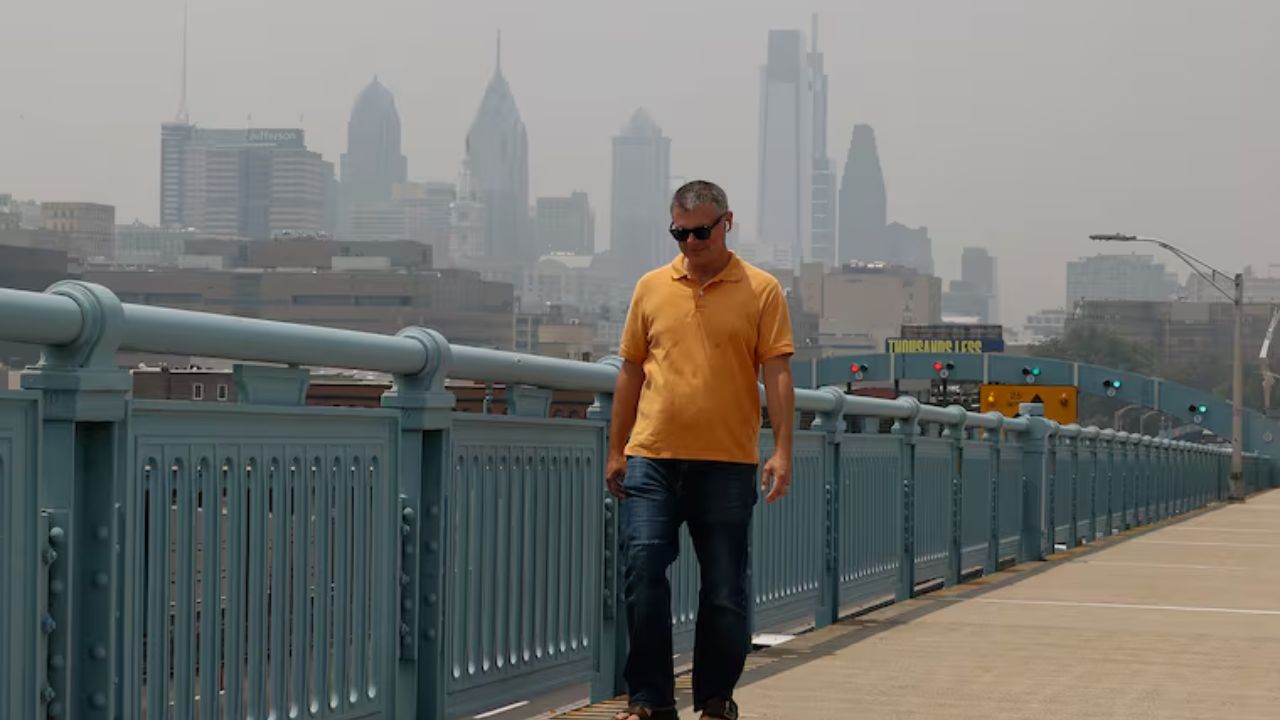
New York, NY – The National Weather Service has issued an updated Air Quality Alert for several New York City boroughs and nearby counties, in effect until 1:45 a.m. Wednesday. The advisory covers Manhattan, the Bronx, Staten Island, Brooklyn, Queens, Orange, Putnam, Rockland, and Westchester counties.
Elevated Ozone Levels Prompt Health Advisory
According to the New York State Department of Environmental Conservation, ground-level ozone is expected to exceed an Air Quality Index (AQI) value of 100 from 11 a.m. to 11 p.m. Tuesday. This indicates pollution levels that could pose health concerns, particularly for sensitive groups.
The AQI is designed to standardize various pollutants on a single scale — with higher numbers representing greater potential health risks. As per SILive, officials warn that elevated ozone levels can cause respiratory irritation and worsen conditions like asthma or heart disease.
Health Recommendations
The New York State Department of Health recommends residents limit strenuous outdoor activity during peak pollution hours, especially:
- Children and older adults
- Individuals with asthma, chronic respiratory issues, or heart disease
- Anyone experiencing breathing difficulties, coughing, or throat irritation
Those who develop symptoms are advised to consult their personal physician.
How to Protect Yourself
To minimize exposure and reduce health risks during the alert:
- Stay indoors during midday and afternoon hours when ozone levels peak
- Use air conditioning with clean filters if possible
- Postpone outdoor exercise until evening or early morning
- Keep windows closed to limit indoor air pollution
Broader Impact on NYC
While ozone alerts are not uncommon during warm summer months, this advisory underscores the ongoing air quality challenges facing urban and suburban areas across New York. In recent years, elevated ozone has increasingly coincided with heat waves and stagnant air conditions, making such health alerts more frequent.
City officials and environmental agencies will continue monitoring conditions and provide updates if the advisory is extended or expanded.
Have you noticed air quality changes in your neighborhood this summer? Share your experiences and thoughts with us.