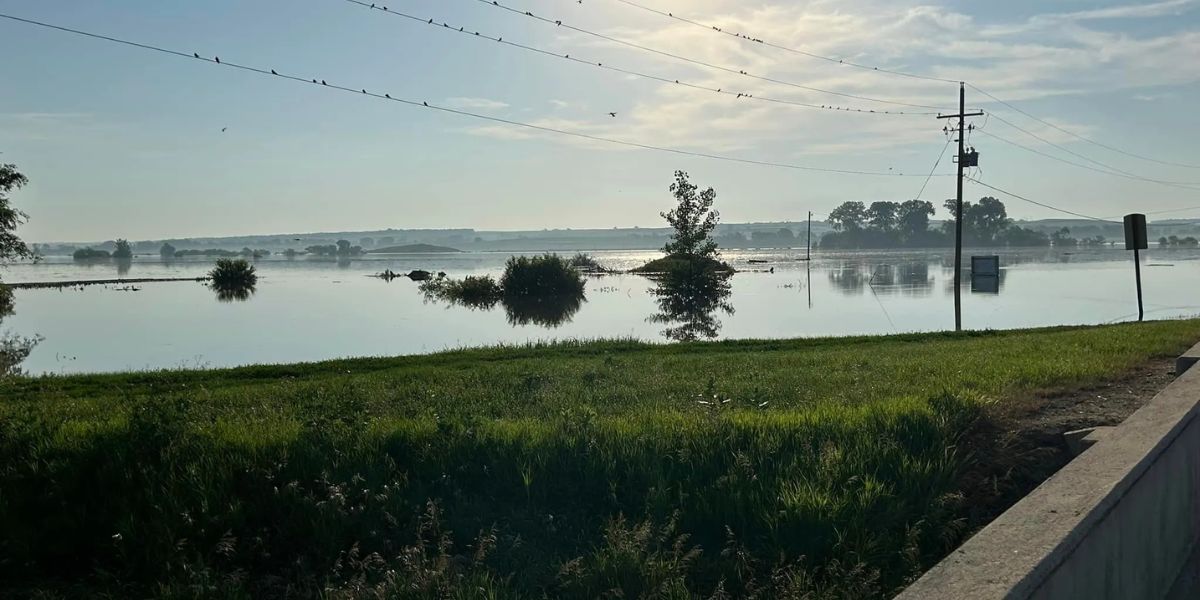
Des Moines, IA — With more frequent flooding events threatening Iowa communities, the Iowa Geological Survey is entering its third year of a statewide initiative to assess the integrity of the state’s levees. The project, part of a five-year program, aims to identify weaknesses in Iowa’s 900 miles of levee systems and prioritize repairs before disaster strikes.
Each fall, teams from the Iowa Geological Survey drive along levees using specialized equipment to measure the soil composition and detect potential problem areas.
“What we’re trying to do out here is find anomalous areas, or different areas, in the levees that could be a potential area of weakness,” said Jason Vogelgesang, geophysicist with the Iowa Geological Survey.
Vogelgesang and colleague Thomas Doyle travel across Iowa in utility vehicles equipped with a ground conductivity meter, which sends electrical currents 20 feet below the surface to analyze the levee’s geological makeup.
How Iowa’s Levee Survey Works
The survey team operates primarily in the fall, when the grass along levees is mowed and access is easier. The team’s process includes:
- Driving along the levee’s top and toe slopes to measure variations in soil density.
- Using PVC-mounted ground conductivity meters to prevent interference from metal on the vehicle.
- Recording five readings per second through a Bluetooth connection to a tablet.
- Analyzing subsurface data to identify sand deposits, culverts, or loose materials that could increase failure risk.
“It’s kind of an innovative method of collecting these data,” Vogelgesang said. “Rather than tearing out an entire levee, we can focus repairs on specific areas most vulnerable to failure.”
According to Iowa Capital Dispatch, the crews have already surveyed over 300 miles of levees since the program began in 2023, with plans to reach more than 450 miles by the end of 2025.
The Science Behind the Surveys
Levees with clay-based structures are typically more stable, while those built with sand and gravel are more prone to erosion and seepage during floods. The data gathered helps pinpoint these weaknesses and guide limited state funding to the highest-risk systems.
Each levee system surveyed receives a detailed report that outlines:
- Areas with potential structural vulnerabilities.
- Locations where hydrological pressure could lead to breaches.
- Recommendations for targeted repairs or reinforcements.
The Iowa Office of Levee Safety uses these reports to rank levee conditions statewide and determine which districts qualify for funding through the state’s Levee Improvement Fund, which allocates $5 million annually from 2024 through 2028.
Funding and Legislative Background
The levee improvement program was established through House File 711 in 2023 after a 2022 study concluded that Iowa’s existing levee management approach was “unsustainable.” The program, along with the Office of Levee Safety, was designed to create a unified flood risk management strategy across local levee districts.
Under the program:
- Levee districts can apply for cost-share funding to strengthen their systems.
- Survey ratings from the Geological Survey directly influence state funding decisions.
- Town hall meetings and community workshops have been held to improve collaboration among districts.
“We are committed to continuous improvement, leveraging data-driven insights to enhance our initiatives and reinforce our response to flood events,” the Iowa Levee Safety report stated.
Protecting Iowa’s Communities
Vogelgesang said the goal is not just to gather data, but to prevent future catastrophes.
“We want to identify problems before they become disasters,” he said. “If we can strengthen one levee before a flood, that’s a community protected.”
With thousands of data points processed each winter and spring, the Iowa Geological Survey continues to build a stronger understanding of the state’s flood defenses — one mile of levee at a time.
What are your thoughts on Iowa’s levee safety initiative and its impact on flood prevention? Share your views in the comments below.