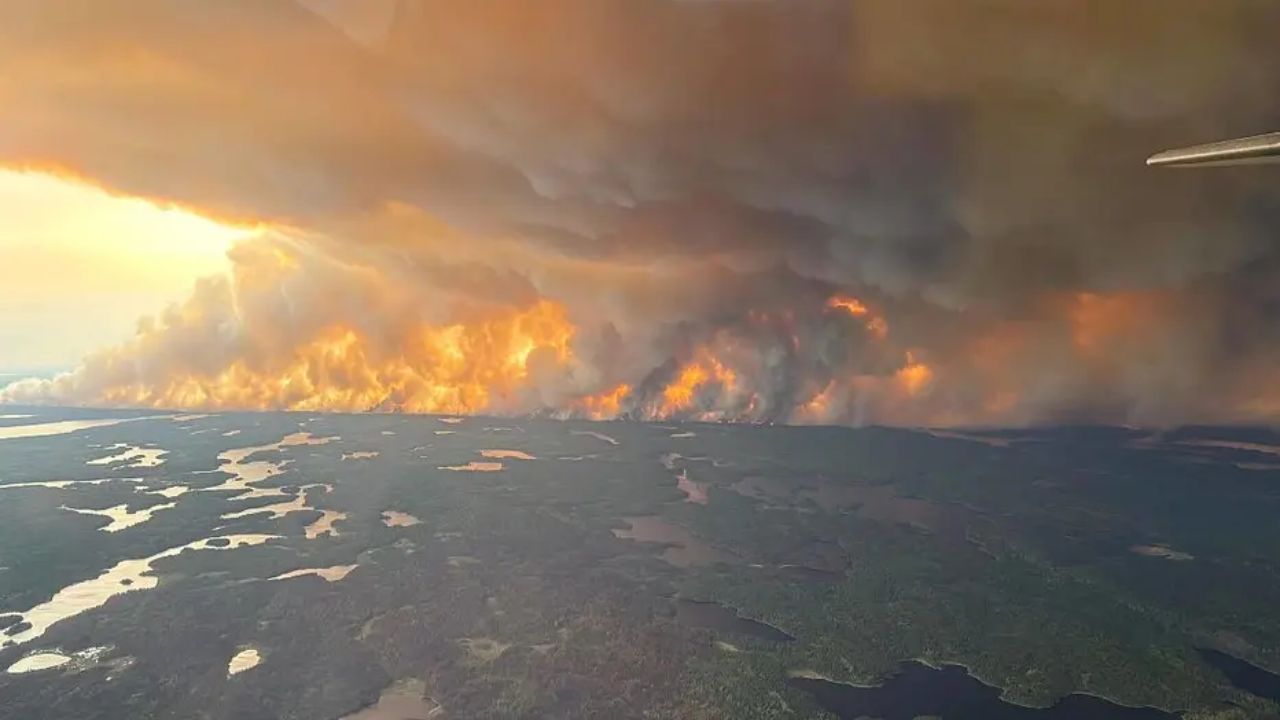
Minneapolis, MN – The Minnesota Pollution Control Agency (MPCA) has extended air quality alerts for parts of southeastern and northern Minnesota due to ground-level smoke drifting in from Canadian wildfires.
The extension impacts southeastern Minnesota, including the Twin Cities metro, until 4 p.m. Tuesday, and northern Minnesota until 11 p.m. Wednesday.
Smoke Impact and Forecast
Heavy ground-level smoke continues to blanket southeastern Minnesota and will linger until mid-afternoon Tuesday before clearing the region, the MPCA reported. Meanwhile, a new band of smoke is expected to move into northern Minnesota Tuesday morning, stalling and affecting the area through Wednesday.
Although this latest round is not expected to be as dense, it will still pose health risks for certain groups as reported.
Air Quality Index Levels
The Air Quality Index (AQI) forecast for both northern and southeastern Minnesota on Tuesday is at orange, meaning conditions are unhealthy for sensitive groups. Central and southern Minnesota should see gradual air quality improvements from Tuesday through Thursday.
Sensitive groups include children, the elderly, and those with heart or lung conditions, who may experience symptoms like coughing, throat irritation, or difficulty breathing.
Local Conditions in Minneapolis
Minneapolis is currently experiencing some of the worst air quality in the world. On Tuesday morning, the city ranked third among major cities globally for poor air quality, with an AQI of 120, according to IQ Air. This level is considered unhealthy for sensitive groups.
The MPCA advises limiting outdoor activities and using air filtration indoors to reduce exposure.
How to Stay Safe in Poor Air Quality
Health experts recommend the following precautions during air quality alerts:
- Limit outdoor activity, especially strenuous exercise
- Keep windows and doors closed
- Use HEPA air purifiers indoors
- Wear an N95 mask if you must be outside for extended periods
- Monitor local air quality updates from the MPCA or trusted weather services
For those with pre-existing respiratory conditions, following prescribed treatment plans and seeking medical advice if symptoms worsen is strongly advised.
How has the wildfire smoke impacted your daily activities in Minnesota? Share your experiences and tips in the comment section below.