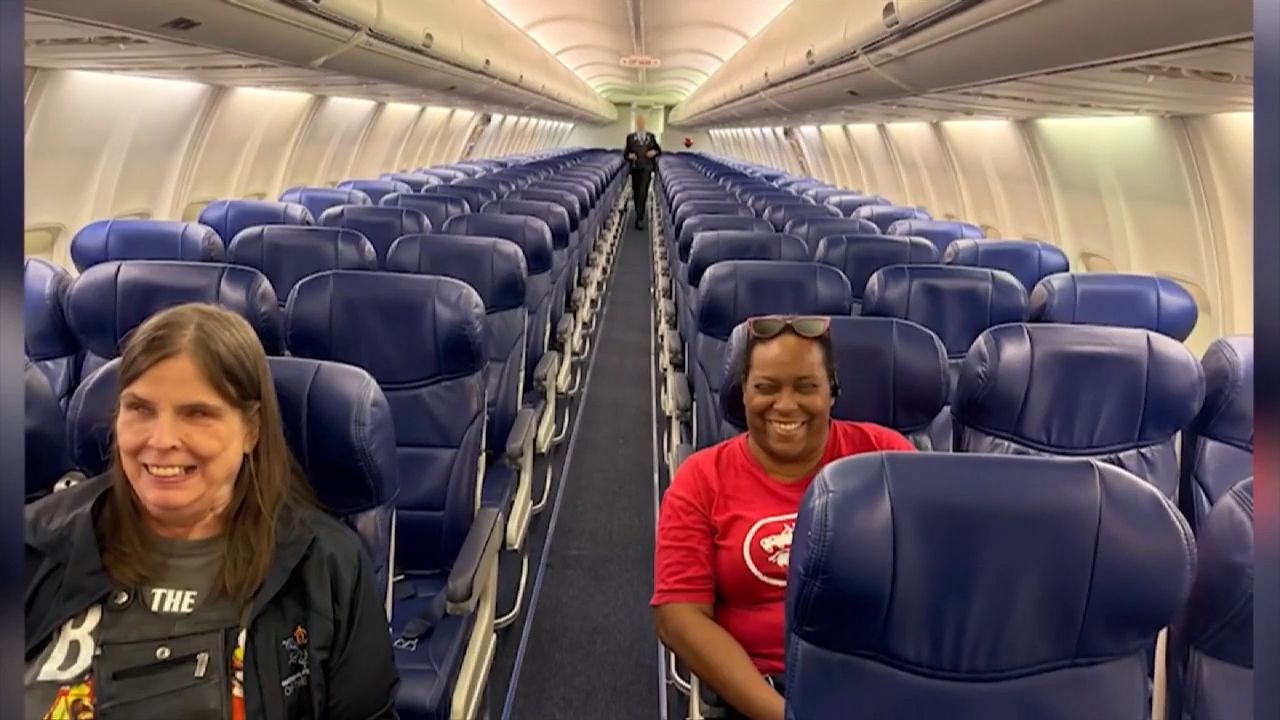
Orlando, FL — Two blind women say Southwest Airlines needs to overhaul how it communicates with passengers with disabilities after they were left as the only two people aboard a delayed flight from New Orleans to Orlando last month.
Only Passengers on the Plane
According to FOX News, Sherri Brun and Camille Tate boarded Southwest Flight 2637 on July 14 after a nearly five-hour delay — only to realize they were the sole passengers onboard.
“You’re the only two people on this flight because they forgot about you,” the women recalled being told.
While they had been waiting at their assigned gate, checking the Southwest app for updates, nearly all other passengers had been rebooked onto another Orlando-bound flight that departed earlier from a different gate — a change they were never informed about.
Federal Requirements for Communication
Under the Air Carrier Access Act, airlines are legally required to provide prompt and effective communication for passengers with visual impairments, especially during delays, rebookings, or gate changes.
Brun and Tate say that didn’t happen.
“Nobody said a word to us about another flight,” Brun said. “We were just waiting at the gate, checking the app, like everyone else.”
“There needs to be some improvement in how they communicate with their passengers, especially those that have disabilities,” Tate added.
Southwest’s Response
In an email to FOX News Digital, a Southwest spokesperson denied claims that the airline forgot the passengers or sent a plane back for them.
“Neither of these is the case. … The Customers were scheduled on Flight 2637. Although it ran almost five hours late that day, it remained their same flight number throughout.”
Southwest said the two women were offered $100 travel vouchers each as compensation for the inconvenience.
“We apologize for the inconvenience,” the statement read. “Southwest is always looking for ways to improve our customers’ travel experiences, and we’re active in the airline industry in sharing best practices about how to best accommodate Passengers with disabilities.”
Call for Change
While the incident caused no physical harm, Brun and Tate say it highlights the gap in communication protocols for travelers with disabilities.
Key points they believe airlines should address include:
- Proactive verbal announcements for visually impaired passengers when flight changes occur.
- Staff escort assistance during gate changes or rebookings.
The women hope their experience will push airlines to prioritize clear communication and better adherence to disability rights laws, ensuring no one is left behind — even on the right flight.
What do you think about this incident? Should airlines face stricter penalties for such lapses? Share your thoughts in the comments.