United States – Rotisserie chicken is now a grocery-store staple, but it was not always that way. In the 1980s, it was still a novelty, largely associated with small restaurant chains rather than warehouse clubs. The shift that made rotisserie chicken a mass-market item—especially at ultra-low prices—helped transform consumer habits and, over time, contributed to the collapse of one of the brands that popularized it: Boston Market.
Costco Turned Rotisserie Chicken Into a Loss Leader
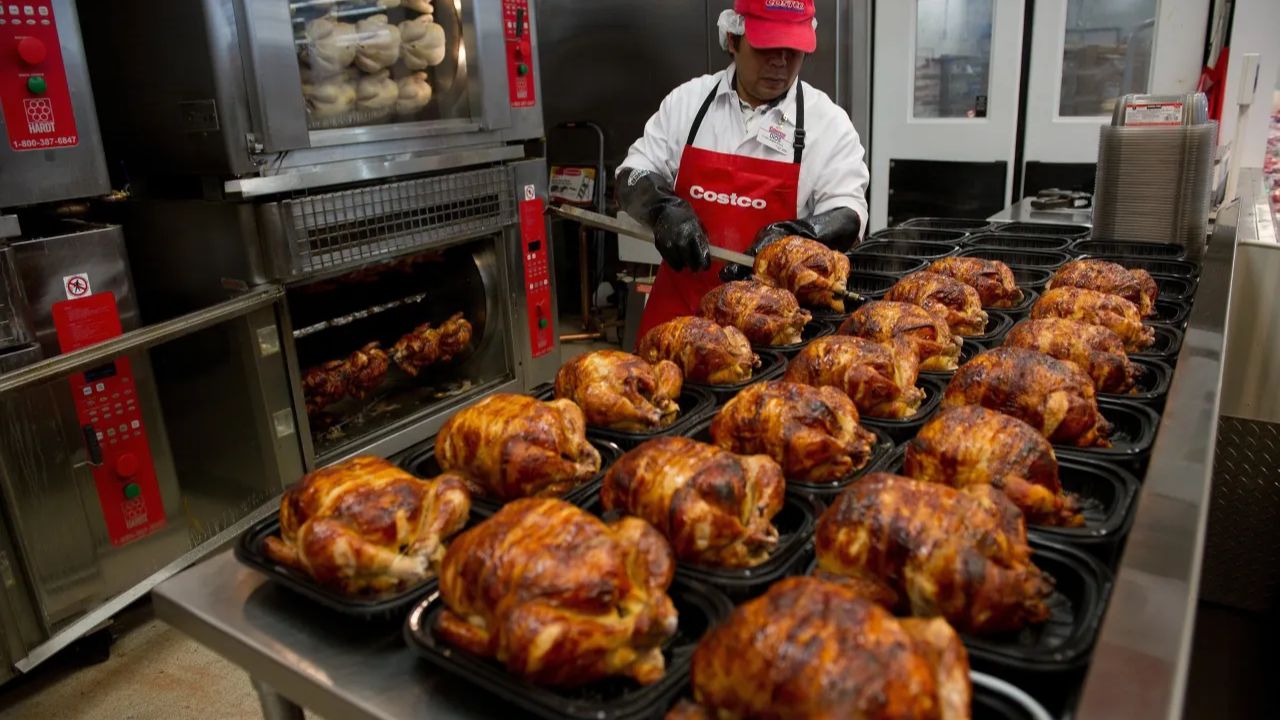
Costco did not begin selling its now-famous rotisserie chicken until 1994. The price—$4.99—has barely changed in three decades, aside from a brief increase during the 2008 Great Recession. According to Eat This, Not That, Costco has intentionally kept the price low despite inflation.
The strategy comes at a cost. Costco reportedly loses money on each chicken it sells. But food writers and longtime shoppers say the company more than recoups those losses by drawing customers into its stores.
Rose Sioson, founder of Deliciously Rushed, explained that the chicken acts as a powerful lure.
She said the value chicken rarely leaves a shopper’s cart alone, often followed by salads, side dishes, wine, dessert, and impulse purchases—making it a classic retail loss-leader strategy.
Boston Market Once Defined the Category
Long before grocery chains dominated the prepared-food aisle, Boston Market—originally known as Boston Chicken—was introducing many Americans to rotisserie chicken in the 1980s and early 1990s. Founded in a Boston suburb, the chain grew rapidly and became a national success story.
At its peak in the 1990s, Boston Market operated more than 1,200 restaurants across the United States. Even McDonald’s briefly invested in the company during its expansion phase. But the same product that drove its early success eventually became widely available elsewhere, often at far lower prices.
A Rapid and Relentless Collapse
Boston Market’s footprint began shrinking in the late 1990s, falling from more than 1,200 locations to roughly 300 by 2023. The decline accelerated dramatically after that. According to Restaurant Business Online, the chain dropped from about 300 locations at the start of 2023 to fewer than 30 by early 2024.
By early 2025, estimates from Flavor365 suggested fewer than 20 locations remained open nationwide. Industry observers noted that official company listings often overstated how many restaurants were still operating, with many locations closing quietly and without notice.
Bankruptcy Filings and Mounting Legal Trouble
Boston Market technically still exists, but its financial situation has been dire. The company’s owner, Jay Pandya, attempted to file for bankruptcy protection twice.
According to Nation’s Restaurant News, Pandya filed for personal bankruptcy on December 8, 2023, listing between $10 million and $50 million in both assets and liabilities. That filing, and a subsequent one, were rejected by the courts due to procedural issues, as reported by Restaurant Business Online.
The chain’s Denver headquarters was seized by local authorities in 2023 over roughly $300,000 in unpaid taxes. Vendors and landlords have filed multiple lawsuits over unpaid bills, and some locations reportedly stayed open only by stocking food purchased from grocery stores after supplier contracts lapsed.
Boston Market also faces a court judgment ordering it to pay key supplier U.S. Foods approximately $15 million, according to PacerMonitor.
Attempts to Recruit New Franchise Partners
Despite the turmoil, Pandya has continued promoting plans to revive the brand through licensing rather than traditional franchising. In 2024, he told Nation’s Restaurant News that Boston Market’s name recognition could still attract partners in non-traditional locations.
Former executives and analysts, however, expressed skepticism. Gina Busby, a former area director of operations, told RetailWire that unpaid wages, misclassified employees, and unresolved lawsuits made the plan deeply troubling.
Analysts Say the Brand Undermined Itself
Restaurant analysts argue that Boston Market’s downfall was not caused by grocery stores alone. Aaron Allen, speaking to FCNews, said the chain tried to compete on price with fast-food brands, sacrificing quality in the process.
“If you chase a lower price-point consumer, you can price yourself out of business,” Allen said.
As grocery stores expanded prepared-meal sections and began selling rotisserie chickens for far less, Boston Market lost its pricing advantage. Retail expert Steve Feldman wrote that the chain ultimately became a victim of its own success, having helped popularize a product that competitors could sell more cheaply and conveniently.
Former employees echoed that assessment. In a LinkedIn post, Josh Taylor cited over-saturation, rising food costs, and expanded menus as key factors. Business researcher Jorge Franchi added that operational complexity and brand confusion eroded what once set Boston Market apart.
Together, those pressures left the pioneer of rotisserie chicken unable to compete in a market it helped create.